The following was written November of 2007 and was originally featured on blogcritics.org. It came at a tough time where I was doing a lot of soul searching. Certainly one of my more personal pieces, it represents the creative building blocks for this blog and the therapeutic road to my recovery… I have re-posted this with some slight revisions and cosmetic changes.
November 2007
I haven’t written very much in the past 20 years. Recently I’ve rediscovered one of my greatest passions. There are many reasons for this that are not necessary for me to get into. That’s another story. Perhaps my recent heart attack gave me the opportunity to spend a fair amount of time reflecting back into my past.
I started listening to a lot of music recently and drifted back to my childhood. Maybe in some profound way I finally felt more justified to discuss my love of jazz music and especially blues. These latest events made me finally attempt to bring my love of music and writing together.
Growing up in the sixties I recall so many genres of music that played in our household. From The Beatles and The Monkees in my sister’s room, to big band jazz in the living room, to my brother’s turntable that spun the soulful sounds of electric blues and jazz in the bedroom we shared.
Music Was Everywhere
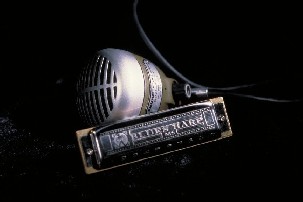
Tunes were always playing in our house even before my birth. It would appear I was breast-fed music and by the time I was in my early teens I developed a natural but unusual knowledge level for my age. My father played the harmonica and my brother the guitar. Together they would have jam sessions that filled the house with a vibrancy that I can never forget.
My grandparents were very orthodox, and while my parents never got too involved in Judaism, they thought that out of respect, they should make me understand my roots. I went to Hebrew School and studied up until I had my Bar Mitzvah at thirteen. I was the strange child that loved listening to the Cantor sing at the synagogue because I was convinced he sounded like Jack Bruce of Cream. To this very day I still think that!
It was this very thought wave that made me think… Is there a link between this? Maybe there was something to it. I know there are people who are going to think I’m off my rocker, but that’s OK. We’re all entitled to our opinion. I wanted to see if instinctively I felt something back then that I couldn’t explain until now.
I started thinking to myself… Out of all the blues and jazz music I remember, how many of these were Jewish? I mean the roots of blues originated in the late 19th century in the American south by African-American slaves forced to work from sunup to sundown. Hmmm… Sunup to Sundown… Sunrise Sunset… Sorry drifted off.
These slaves sang a rhythmic “call and response” to ease their brutal labor and to converse without knowledge of their masters. They were known as “field hollers.” One of the workers would shout a solo line, and then the others would repeat a harmony line, all while being in tempo with the work at hand. This is the seeds of the blues, and the improvisational style of early jazz would stem from this.
In Europe something interesting was developing…
At the end of the 19th Century and the beginning of the 20th, many of the Jewish people lived in the Pale of Settlement. This included the territory of present day Poland, Latvia, Lithuania, Ukraine and Belarus. The Jewish people from these Eastern European parts borrowed and synthesized music from different cultures, including styles with North Africa. When this Jewish culture started arriving as a whole in America’s northern cities, they brought with them a style of music called the “Klezmer.” A word created when combining the words vessel and song together.
African Americans were escaping poverty, and in America’s south headed for a new beginning in the great cities of the industrial north. They brought the blues with them and started to form a new lifestyle away from oppression. In the formation of the blues, vocalists developed a style that was familiar, but at the same time not heard of before. During this time, horn and string players studied these blues singers, imitated their techniques and altered the sound to their own instrumental accompaniment.
W.C. Handy was one of these horn players and would eventually be known as the Father of the Blues. Jewish people and African Americans would live together in the big cities of New York, Boston, and Chicago; sharing their experiences with similar impoverished roots.
Al Jolson
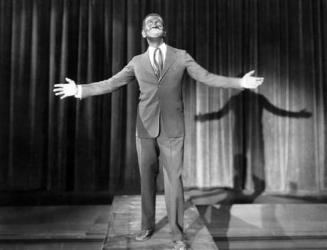
is a name which comes to mind as somebody who best links the two cultures. Jolson’s The Jazz Singer was the first movie to use sound as dialogue. The movie is a creation of Jewish imagination and it tells the story of a dream and new found ambition in conflict with old world values in America at the time. Musically it’s a mix of jazz and Yiddish blues by way of Tin Pan Alley.
A professional scholar of musical studies could better explain the musical notes and the similarity in the Jewish musical roots to that of the blues…
The contributions of many Jewish performers would continue to influence the blues and jazz scene. The significant clout of artists like Artie Shaw, Buddy Rich, Mel Torme, Stan Getz and Irving Berlin were massive at the time, and that’s just to name a few. Many believe that George Gershwin was strongly influenced by his Yiddish background. The beginning clarinet of “Rhapsody in Blue” was definitely a Klezmer influence and Benny Goodman is also a good example of this. Not to compare myself by any means, but these were Jewish people with their roots in the synagogue like me.
My soul searching while I was recovering from my heart attack was now starting to come together. There was something I felt back then. The big band jazz and sleepless nights of soulful blues was finally making sense. It would certainly explain why my father would play his harmonica and jam with my brother, and so profoundly be turned off by The Monkees and even The Beatles.
Fast Forwarding to the Sixties
The contributions of Jewish people in blues and jazz continued, and I recalled my brother spinning music of The Paul Butterfield Band on his turntable. Mike Bloomfield, who received his first guitar as a Bar Mitzvah present, would contribute and inspire a new generation of musicians and fans. It really didn’t matter where he was from; the sound was pure and heartfelt. Everyone, including all the blues giants couldn’t deny his talent. Bloomfield was so dedicated to his craft, he turned down going on the road with Bob Dylan to stay with Paul Butterfield.
By the way, speaking of Dylan, between Al Kooper’s The Blues Project and the Highway 61 Sessions Revisited, there were so many Jewish contributions you could have easily had a minion if you needed to.
In the sixties, John Mayall and the Blues Breakers were carving a name for themselves in the British Blues scene. Now don’t get concerned, I’m not going to tell you that Eric Clapton was Jewish. However, when Clapton left The Blues Breakers he was replaced by a Jewish blues man called Peter Greenbaum, more commonly known as Peter Green.
Green would eventually be known as a pioneer of the British blues scene. Everybody would marvel at the sound that Green would generate from his famous 1959 Gibson Les Paul. B.B. King would go on to say that Green,
“…has the sweetest tone I ever heard; he was the only one who gave me the cold sweats.” ~ B.B. King
Similar to Clapton, Green only worked on one major album with John Mayall and the Blues Breakers and would go on to form a little known band of his own called Fleetwood Mac. Just in case you never knew, he also wrote “Black Magic Woman,” made famous by Santana.
I mentioned earlier about Jack Bruce. My research leans towards the fact that while certainly Scottish, he has some Jewish ancestry. I cannot prove that notion, but he always had the Cantor feel to me. However his songwriting partner Pete Brown, responsible for many of Cream’s hits was definitely Jewish. So maybe Brown did have some Klezmer influence on Jack. Who knows!
I feel I could go on and write more on this subject. There are so many names to mention. I’m sure that many of you who are reading this are coming up with a few yourselves? We can always touch on this through your comments.
Anyways… I hope you found it interesting?
I think it’s important to know that this subject matter is quite vast and has viewpoints that are not very positive. I have chosen not to touch upon those areas. My whole approach to writing is not to concentrate on the negatives, but to be positive and upbeat. Music has and always will be my great love. When all is said and done, it doesn’t matter who we are or where we’re from. We will always feel sorrow, joy, anger and love together through song.
Feeling Good,
The Blues Blogger
You remember or may want to research and look for a great blues album done by Mike Bloomfield who I knew and Barry Goldberg the Hammond organ player it was titled, Two Jews Blues on Buddha records…!
I do remember the album from my early days when I worked at a record store.There are some titles you can never forget. What an amazing talent Bloomfield was! Thanks for your comments TJ.
How did you know Bloomfield?
I’m neither Jewish nor black but I’ve been listening to both blues and Jewish music since I was a teenager and I love them both (I play guitar). I very much doubt that Pete Brown introduced Jack Bruce to klezmer music, if only because klezmer music was not big in the UK during the 40s and 50s when Brown would have been growing up, but chiefly because Brown was not a musician but a lyricist.
I agree with you that blues and Jewish music are sometimes reminiscent of each other. I have a recording of Cantor Benzion Miller singing Orthodox melodies that’s as intense as anything by Robert Johnson, although the scales and structures are very different.
If you wanted to find a British blues musician who might well have been influenced by Jewish music, look no further than Peter Green.
Hi from Cape Town South Africa. Lovely article. I produce an Afro-Jewish band “THE BAGEL BOYZ’ and I deliver a talk eg at Limmud titled ‘ Rhythm + Jews ‘ ( borrowed from a Klezmatics cd title) – the crossovers between African roots and Jewish European sounds are many. Great blog – and may your heart grow stronger !
Shalom.
Henry ( Tzvi ben Chaim Halevi)
What an incredible discovery. Of course the blues are also Jewish!
Celtic legends talk about the “first music”, which is the concept that there is one basic music that underlies all great music. The closer it is to the original, the more magic can occur. Look at what the early music stars tried to achieve (Mozart, Beethoven, etc.), and the evolution of that — and we come to blues and jazz, which is closer still to magic.
Hi – great article… I love the historical references…The PBS special “Latin Music USA” has 4 episodes; I believe it’s episode 2 on “SALSA” talks a lot about Jewish folks in NY and what a big role they played in the development of that whole scene… Bill Graham, of the Fillmore…came up in that milieu…His real name was Wolodia Grajonca. Check it out! http://en.wikipedia.org/wiki/Bill_Graham_(promoter)
Anyways great job!!
This was a masterpiece of a post… led me thinking into area’s I wouldn’t necessarily have arrived at while listening to the blues !! You truly have 2 great passions(at least2)… your love and true understanding of the blues and your passion for writing !! You are right when you said that “Jack Bruce” seemed to sound like the “cantors” at the synagogue,or “vice-versa”… I just never put that together… by myself !! Also, I understood that “Peter Green” was considered a “pioneer” in “british blues”… but to me… “John Mayall” is the “Father” of the British blues scene… I mean really… since he’s had a “working band” since the “middle to late 50’s !! That’s why he had so many “brilliant musicians” come through his “Blues Breakers Bands”… it was a “paying gig” for them all !! Somehow I can’t help feeling that they all achieved their own greatness… through his nurturing and influence upon them all !! John Mayall has been a necessary part British Blues for almost, if not, 60 years it seems !!
Back on track now…. thank you Blues Blogger for sharing all of your music knowledge and writing skills with all of us here… through your own “necessary creation”… your “Blues Blogger Blog” !! Here’s to many more years of “your influence upon us” through the “blues and jazz” genre’s of great music !!
Wonderful stuff! “Two Jews’ Blues” (Bloomfield, Goldberg et al.) blew me away when it first came out, and I’ve loved it ever since. Actually prefer listening to that than to Super Session!
This is one of the most interesting and informative articles I have read recently– Thank you
So well written and it pleases my mind’s visuals of the history of the Jewish people to the arts.Yes Jewish music because it(the cantation of prayer) is in minor chords, can get soulfully swinging.This article and what it shared from BB was indeed very touching to me. Thanks BB and a very Healthful and Happy Anniversary!
As fresh today as when you wrote it it 2007! This is a brilliant write up!
to me music has no boundry, no color no sex and no ethnicity
it just makes me feel good which to me is all that matters however knowing the history and where music originates from helps to understand why it was written and by whom you have once again educated me on one of the loves in my MUSIC and again i thank you without this blog i would not have know the history of these musicians!!
Man oh man oh man!!!!!!
I completely totally absolutely forgot all about The Electric Flag!!!
Thanks for the great kick in the memory brain!
Hi TBB, this post reminded me of the Coen brothers’ movie that’s in theaters right now, “A Serious Man”. It’s basically about Jewish culture in suburban America of 60s. I have mixed feelings about it (Coen brothers sometimes annoy me 😀 ) but your reference to Cantor sounding like Bruce could be a line from the movie. Take care!
Don’t forget about Ronnie Earl, the guitarist with the deepest feeling in the Blues area! He is also (Hungarian) jewish.
Back to the early jazz singers – I’m a huge fan of Cab Calloway and it absolutely sounds to me as if he was influenced by Cantor singing and klezmer sounds. The “melting pot” of cultural influences is the very definition of American music as far as I am concerned.
Leslie West is another great jewish blues musician.
I find it both sad and interesting that both Peter Green and Leslie West felt it necessary to change their last names to sound “less Jewish” in order to find acceptance in the music world. (Personally, I would be more concerned about being a guy with a girl’s first name than having an ethnic last name!)
This came up in conversation when my drummer, a Mr. Rosenberg, thought it would be better to go by Rose. I told him to ask his mother how she felt about him changing his name. I’m pretty sure she set him straight, because he hasn’t brought it up since!
Hi, I’m a musical producer coming from swing “area” and I recently set up a Jewish band with the precise intent of creating a bridge between jazz and Jewish music (our last song of the show is Bei mir Bist du Shen”.
Check it out at http://www.goldenepave.it of on their facebook site here: http://www.facebook.com/pages/Goldene-Pave/143603912321143?v=app_4949752878
Good Morning,
My name is Luigi and I’m writing from Italy.
I found this article while looking for some evidence of a feeling which often assails me when thinking about the old blues of early cartoons: I remember the sadness and strength of that music and I instinctively associate it with Klezmer music. If you listen to songs like St. James Infirmary, you can’t help recognizing a strong Jewish flavour, sort of biblical lament, a sort of prolonged sound of exile and exodus. Thank you for writing this short essay and exchanging so much important information.
Don’t let the last name fool you – my Mum was Jewish. I grew up in the ’50’s and ’60’s in and around London. At that time the British Trad boom was flourishing although it didn’t fire my imagination too much at the time. In 1962 I heard Stan Getz for the first time – there was a culture hero for me. My eventual drug of choice however was not the tenor sax but the trumpet; it still is. Prior to that in my single – digit years my greatest buzz was the BBC’s Goon Show (Peter Sellers -another Jew – Spike Milligan, Harry Secombe.) The musical interludes were provided by Max Geldray, Dutch Jewish harmonica player, maybe the first jazz I ever heard, and Ray Ellington, West Indian drummer/singer – no relation to Duke but for a while I confused the two.
Thanks for this review-I switched on because it had struck me that there were so many good Jewish blues and jazz players, (and i wasn’t sure that this had been noted!) I hope you do not mind if i try to correct you on one matter- Fleetwood Mac were not even in their early days a ‘little known band’ and ‘Black Magic Woman ‘ was made famous by P. Green, just as much as by Santana-not that i have anything against the latter, on the contrary.
P.S. My first ‘proper’ LP was ‘Pious Bird Of Good Omen’, and then Axis (Hendrix) and then Elmore James, and M. Waters i saw on my 14th birthday ,on which day i also bought R Johnson (Vol1-vol 2 did not exist then) and Skip James (also 120 no. 10 cigarettes, said i was 17) Thanks again for your contribution, and regards