Entries Tagged as ''

Led Zeppelin: 40th Anniversary of Landmark Release

This month marks the 40th anniversary of Led Zeppelin’s debut album. It’s a record that not only made a distinct impression on the music world, but also stimulated our imaginations; leading us on a alternate path into the blues/rock world. And a newly discovered one that would eventually give birth to heavy metal…

January 1969

was the last year my family spent together in the house we grew up in… Emotions were flying high. Something was going on with my father, and it wasn’t good… It was shortly after New Years of 1969 that my dad suffered the first of several heart attacks. The father I once knew became a different person overnight. He lacked the patience and humor he once had, and I developed apprehensive feelings towards him. I was too young to understand anything otherwise…

My brother waited for my father to leave the house so he could play his new Led Zeppelin LP… So when the right time came, he carefully opened the package, slid the vinyl record out of its sleeve and placed it onto the turntable. Soon the room filled with a sound unlike anything I had ever heard before. It was captivating, and my brother played along to the beat with his newly acquired red Gibson SG… He would always go back to the turntable and replay the more bluesy selections like “You Shook Me” & and “I Can’t Quit You Baby.” And I watched from the top bunk-bed mesmerized as he hit all the right notes perfectly. It was very cool… I knew right there that music was going to be in my future. It was only a matter of time before I discovered how.

The New Yardbirds Change Their Name

In August 1968 The Yardbirds disbanded. Jimmy Page, the only remaining member, was left with the rights to the group’s name. With the new musicians Page put in place, and some new material the “New Yardbirds” briefly toured, but soon changed their name to Led Zeppelin… The rest is history.

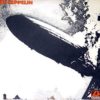
Led Zeppelin 1 was released on January 12th,1969. It was produced by Jimmy Page and engineered by Glyn Johns. Recorded in October of 1968 at Olympic Studios in London, it wasn’t positively received by critics at first. However, the album was commercially successful.The recording was so ahead of its time, it took critics 20 years to catch up. It’s now rated number 29 on Rolling Stone magazine’s 2003 list of the 500 greatest albums of all time.

“The cover of Led Zeppelin…shows the Hindenburg airship, in all its phallic glory, going down in flames. The image did a pretty good job of encapsulating the music inside: sex, catastrophe and things blowing up.”
—Greg Kot, Rolling Stone

The entire album was recorded in about 36 hours over a span of two weeks. Page did say in many articles that the group was well seasoned and rehearsed before even getting in the studio. And that the record was totally paid for before taking it to Atlantic Records; ensuring that Page would remain in control of his vision.

The album was also one of the first to use “natural room ambiance” to enhance the sound during its recording. Page created new innovations in sound recording unheard of prior. Music producers as a rule would place microphones directly in front of the amplifiers and drum kits. Page added microphones a distance from the amplifier and recorded the balance between that space. The album was also one of the first to be released in stereo-only format;in a time when you would normally release both mono and stereo versions.

As a young music connoisseur at the time, I discovered Led Zeppelin through my brother’s love of music as a guitar player… In the past I’ve written several articles highlighting albums from the year 1969. It was a year in music that made an impression on me and many others that’s for sure… I do recall it being a tough time for us as a family… But it was the music that stood loud and clear. It always seems to get you through the toughest of times. And Led Zeppelin lead the charge in 1969.

The subject matter regarding this landmark recording is just too vast for one post alone. Perhaps you can help by adding your comments on this extraordinary moment in time? How many of you remember where you were when Led Zeppelin’s debut album came onto the scene?

Remembering the Times,

The Blues Blogger

Robert Johnson: Is This The End of 508 Park Avenue?

Blues for 508 Park Ave: Owners of the “Robert Johnson Building” File for Demolition Permit

For more information and comments regarding this, you can click on the link above to take you to the article by The Dallas Observer.


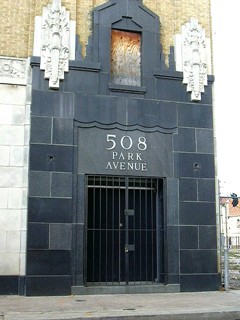
508 Park Ave… the building in Dallas where Robert Johnson recorded 13 songs that shaped the course of Blues & Rock n Roll, may very well be demolished… While I think many people are aware of this, most may not know how soon. The truth is… the day may actually be sooner than we would like to think!

Everybody has fond moments from their past— Places they remember that are close to their heart. We love recalling not only personal memories, but the strong influences that also inspired us. And we create historical monuments and heritage landmarks to mark the significance of important people, places and settings throughout time…. So here’s the question… Why is one of Blues and Rock ‘n Roll’s most famous and important landmarks on the verge of being destroyed?

The building, its neighborhood and all the parties involved all have their challenges to face. Some say why keep a run down building where a blues artist recorded a few songs over the course of two days? I’ll answer that one. Because it was those two days that shaped and influenced the music many of us know and love today… Others say legends and folklore simply don’t generate a profit in a decaying area… The solutions are not simple, and I will not say I have any answers… I was asked in an email to share with my Blues Blogger readers the current circumstances so people were aware. There are many people out there who are not.

I pray that somehow, someway, or perhaps someone can come up with a strategy to prevent this horrendous act from taking place. There are far too many people connected to the blues heritage to let it be knocked down like is. It’s like ripping the roots out from your very heart and soul.

Two Days That Shaped Blues and Rock n Roll

On these dates below the following songs were recorded:


Saturday, June 19, 1937 – 508 Park Avenue Dallas, TX

“STONES IN MY PASSWAY”
“I’M A STEADY ROLLIN’ MAN”
“FROM FOUR TILL LATE”

Sunday, June 20, 1937 – 508 Park Avenue Dallas, TX

“HELLHOUND ON MY TRAIL”
“LITTLE QUEEN OF SPADES”
“MALTED MILK”
“DRUNKEN HEARTED MAN”
“ME & THE DEVIL BLUES”
“STOP BREAKIN’ DOWN BLUES”
“TRAVELING RIVERSIDE BLUES”
“HONEYMOON BLUES”
“LOVE IN VAIN”
“MILKCOW’S CALF BLUES”

Whenever I Go Home

I always make it a point to drive past the old house I grew up in… On one such occasion many years back, I noticed the place was for sale… Amazingly, there was an open house the following afternoon. The next day I took my wife and son along on my reflective trip. I couldn’t resist… It was well over 30 years since I set foot in the place. And I wanted to take advantage of the opportunity while I still could. As I walked through the door, that was it… I drifted off into space as I could hear the mystical sounds echoing my first memories of life…

So to all readers of this post, please share this article so that others are aware of what’s going on. I couldn’t imagine how torn I would’ve been had I seen an empty lot while driving past my old home. Memories from the house I grew up in were deeply inspired by those two days in Dallas in 1937; whether I realized it back then or not. For many people out there, tearing this building down would be like magnifying those feelings a million times over.

How familiar are you with the legend of Robert Johnson? How do you feel about this? Add your comments below and let your opinion be heard! Matters of the heart and soul are the most important thing in life. Without it, satisfaction makes very little difference.

The Blues Blogger

Gene Krupa: Remembering 100 Years

Thursday January 15th, 2009

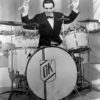
marks what would have been the 100th birthday of the greatest drummer who ever lived. This post’s intention is take you back and reflect upon this great man. And perhaps for those that are younger, create some awareness of this extraordinary and influential musician… I didn’t want this Thursday to be an afterthought… I wanted to write something because I always felt connected to Krupa’s music through my father’s admiration of him.

Last spring I wrote an article called Gene Krupa:The King of Cool. It was very special to me, as I so fondly recall my early youth when my father seemed to play Krupa’s LP’s daily… One of the comments from that article mentions how Krupa achieved “Supreme Greatness.” Tough to dispute! Just ask any knowledgeable drummer alive today and there will be very little argument… Clicking the above link will take you to that article.

Father of the Drum Solo and Modern Drum Set

Prior to Krupa drummers were mostly known as time keepers. Gene introduced extended drum solos into jazz swing music… He is also known for convincing H.H. Slingerland, of Slingerland Drums to make tunable tom-toms and was a loyal endorser of theirs from 1936 until his death in 1973. He was also called on by Avedis Zildjian to help develop the modern hi-hat cymbals. Gene’s very first recording session in December 1927 was very historical as well. It represented the first time a drummer recorded with a bass drum. Producer Tommy Rockwell was noted as being hesitant, but eventually gave in saying…

“All right, but I’m afraid the bass drum and those tom-toms will knock the needle off the wax and into the street.”

I will never claim to be an expert on any genre of music. I’m just a guy who is deeply moved and inspired by music in general. But for me the music of Gene Krupa is where my love of music truly began. In fact it was the first beat I probably ever heard; as my father would swaddle me and swing back and forth to the rhythm of the music.

Today I find Krupa’s music nurturing to both my heart and soul… Even though my father and Gene Krupa are no longer with us, the era and musical spirit will forever live deep inside my fondest memories of being a kid.

The following quote from Anatomy of a Drum Solo, best describes in my opinion Krupa’s influence on a modern day drummer:

…before I ever touched a pair of drumsticks or knew what a snare drum was, I saw The Gene Krupa Story on late-night TV. To the boy I was then, the notion of being a drummer seemed exciting, glamorous, elegant, and dangerous, and my eyes must have been shining with inspiration and desire. I remember thinking, “I wanna do that!”
—Neil Peart

All of your thoughts and comments on this amazing man are most welcome… Do you have any memories of Gene Krupa you would like to share? I know I will definitely have some of Krupa’s music on my playlist for this Thursday…

From the Heart,

The Blues Blogger